15 December 2025
Best Irrigation for Close-Spacing Vegetables
Why Laser Spray (Rain Pipe / Rain Hose) Irrigation is Perfect for Close-Spacing Short-Height Vegetables
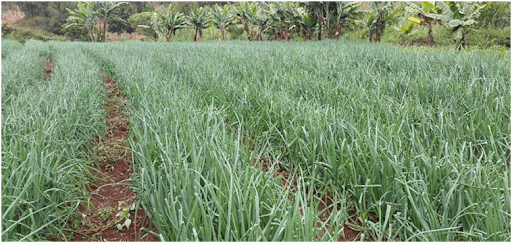
In modern agriculture, efficient irrigation methods are vital to ensure higher yields, healthier crops, and optimal resource utilization. Among the various irrigation techniques, Laser Spray (Rain Pipe / Rain Hose) irrigation has emerged as a game-changer, particularly for close-spacing, short-height vegetables like onions, garlic, leafy greens, potatoes, and cabbages. Its unique advantages make it a cost-effective and sustainable alternative to traditional drip irrigation systems.
Understanding Laser Spray (Rain Pipe / Rain Hose) Irrigation
Laser Spray irrigation, also known as Rain Pipe or Rain Hose irrigation, involves distributing water evenly over crops using fine nozzles or perforated hoses. Unlike drip irrigation, which delivers water directly to the root zone, Laser Spray (Rain Pipe / Rain Hose) mimics natural rainfall, ensuring uniform water coverage across the field. This method not only saves water but also helps maintain soil health, reduces erosion, and improves crop quality.
Laser Spray irrigation creates a fine, even spray over the entire plant canopy, ensuring that every plant receives adequate moisture without over-saturating the soil.
Economic Advantage Over Drip Irrigation
Laser Spray (Rain Pipe / Rain Hose) irrigation is significantly more economical than drip irrigation for close spacing crops. Normally, there should be one dripline per crop row or two crop rows due to the limited spread of the water drops in the soil. Therefore, one needs far too many driplines to cover all the rows in case of close spacing crops. But, each Laser Spray (Rain Pipe / Rain Hose) tube can cover multiple crop rows and so only a few spray tubes (lines) are sufficient for a large area. Thus, Laser Spray ( Rain Pipe / Rain Hose) irrigation is the practical and economically feasible option for close spacing crops.
Multiple Benefits Associated with Spray Irrigation
Laser Spray irrigation offers several additional benefits beyond cost savings and suitability for close-spacing crops:
- Even Moisture Distribution – The uniform spray ensures consistent soil moisture, preventing dry patches and promoting uniform crop growth.
- Improved Germination – Gentle surface irrigation encourages seed germination by keeping the soil porous and preventing crust formation.
- Temperature Regulation – Spraying water over the crops helps maintain a cooler microclimate, reducing heat stress in hot conditions.
- Enhanced Photosynthesis – Wetting the leaf surface can remove dust and promote better light absorption, indirectly boosting photosynthesis.
- Reduced Soil Erosion – Unlike flood irrigation, Laser Spray minimizes soil displacement and nutrient wash-off.
- Washing away of pests - It washes away insects and thereby reduces the need for spraying of insecticides.
Why Farmers Prefer Laser Spray (Rain Pipe / Rain Hose) for Vegetables
Farmers cultivating onions, garlic, cabbages, leafy greens, and potatoes deal with challenge of close crop spacing. Laser Spray irrigation addresses this issue being economically feasible. Compared to drip irrigation, which can be costly and technically demanding, Laser Spray offers a simple, effective, and scalable solution.
Additionally, the system encourages sustainable farming practices by reducing water wastage and maintaining soil health. For vegetables that are sensitive to both under- and over-irrigation, this method provides the perfect balance, enhancing both yield and quality.
Experience of farmers’ growing close spacing short height crops:
Please click this link to see the videos of farmers’ testimonials on use of Laser Spray on various crops including close spacing short height crops:
https://www.youtube.com/playlist?list=PLzonvBR9XKNlK_4ALtrdq1rvxhrdOFnk1
Conclusion
In conclusion, Laser Spray (Rain Pipe / Rain Hose) irrigation is an ideal choice for close-spacing, short-height vegetables such as onions, garlic, leafy greens, potatoes, cabbages, soyabean, wheat, and paddy etc. Its economical setup, low maintenance, and multiple agronomic benefits make it a superior alternative to drip irrigation. By ensuring uniform water distribution, promoting soil health, enhancing photosynthesis (thereby improving yield and crop quality), Laser Spray irrigation is paving the way for more sustainable and profitable cultivation.
For farmers seeking an efficient, cost-effective, and versatile irrigation solution, investing in Laser Spray irrigation is a step toward higher yields, healthier crops, and smarter water management.
FAQ
1. Why is Laser Spray irrigation ideal for close-spacing vegetables?
Laser Spray (Rain Pipe / Rain Hose) irrigation provides uniform water distribution across multiple crop rows, making it highly efficient and cost-effective for closely spaced vegetables.
2. Which vegetables are suitable for Laser Spray irrigation?
Laser Spray irrigation is suitable for onions, garlic, cabbage, leafy vegetables, potatoes, coriander, fenugreek, spinach, soyabean, wheat, paddy, and other closely spaced crops.
3. Is Laser Spray irrigation more economical than drip irrigation?
Yes. Unlike drip irrigation, which often requires one dripline for every one or two crop rows, a single Rain Pipe can irrigate multiple rows, reducing installation and maintenance costs.
4. Does Laser Spray irrigation improve seed germination?
Yes. The gentle and uniform water application keeps the soil moist and porous, creating favorable conditions for faster and healthier seed germination.
5. Can Laser Spray irrigation improve crop growth?
Yes. Uniform moisture distribution, reduced heat stress, improved photosynthesis, and healthier soil conditions contribute to better crop growth and higher yields.
6. Does Rain Pipe irrigation help reduce pest problems?
Yes. The fine spray can wash away small insects from plant surfaces, helping reduce pest pressure and lowering the need for insecticide applications.
7. How does Laser Spray irrigation save water?
It delivers water uniformly across the crop canopy with minimal runoff and wastage, improving water-use efficiency compared to traditional irrigation methods.
8. Can Rain Pipe irrigation be used for large farms?
Yes. Rain Pipe / Rain Hose irrigation is scalable, easy to install, and suitable for both small and large farms cultivating vegetables and field crops